It is an awe-inspiring sight to look out the window of your plane and see the shores of another country come into view. That is the excitement that comes when you cross the Pacific Ocean.
It started as a dark rolling landscape on the horizon. I strained to look out the window, but there it was. Japan. I was half a world away from my North Carolina home.
The excitement soon gave way to culture shock. I expected it, but not as immediately.
Arriving at Haneda airport, you follow the throngs of people to the customs area. It was a quick process and before you know it you are boarding the only train that takes you from the terminal to Tokyo Station.
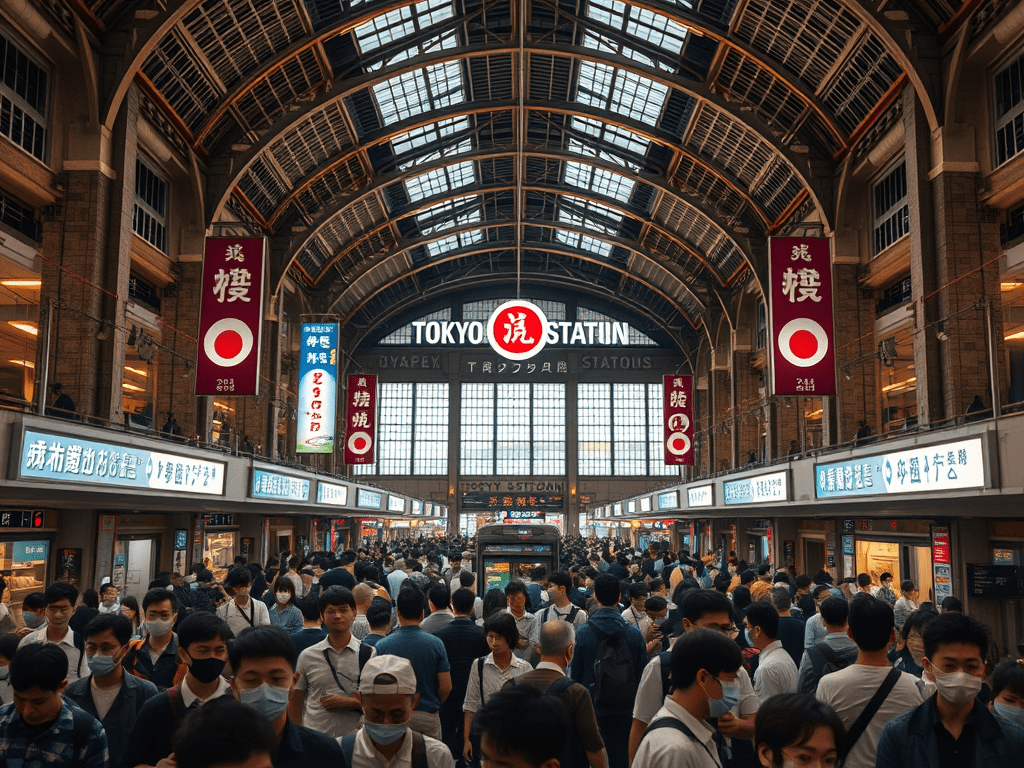
This is where the “shock” sets in. Tokyo Station is massive. Its tentacles branch out in a multitude of directions. Everything is in Japanese as you would expect, but it’s the number of people that stings.
Leaving the United States wasn’t all that difficult. I flew from Raleigh to San Francisco. The airports were busy, but Tokyo Station was on a different level.
You must first figure out how to navigate the terminal, and there is no easy answer because it depends on where you are heading. I was going to Uji, just outside of Kyoto.
(Recommendation: Stay the night at the airport in one of the hotels to give you time to acclimate.)
My first task was to get to the Shinkansen office to redeem my prepaid voucher for a ride on the bullet train. You can not purchase this in Japan. It has to be done weeks (or months) prior to leaving your home city. We will have more on this in subsequent posts.
New York is a fast-paced metropolis, but Tokyo is the largest per-capita city in the entire world, and I swear everyone is making their way through Tokyo Station.
The good news? Most everyone is willing to help. From service agents, to other travelers, to the Japanese people themselves, a simple “Sumimasen” will get their attention.
The hardest part about navigating the station is getting outside of your own head. If it is your first time, you will be confused, disoriented, even. The jetlag is starting to set in, you’re hungry, need the bathroom, and have no idea where to start.
Take a deep breath, that’s the start.
While most everything is in Japanese, most of the signs, especially for trains, will rotate through English. Even the voice-overs on the trains, on the platforms, and even in the station itself will have English versions.
The best part is that while it may feel daunting, Kyoto, Tokyo, Osaka, and everything else are still spelled the same, so it is a lot easier to find the words “Shinkensen – Osaka.”
I honestly didn’t plan this part of my trip all that well. My hotel was hours away by bullet train, so there was no time for me to waste. I had to be in Uji by 10 p.m., or I didn’t have a place to stay. Many of the hotels in Japan do not have 24/7 front desk check-in options, so verify before you leave!
Finding the office to redeem my voucher wasn’t all that hard once I took the time to look around and realize there were directions. Once you manage to get your reusable ticket for the trains, you need to find which train to get on.
That wasn’t nearly as hard as I had expected. I found the Shenkensen trains and then looked for one going to Kyoto. The best part is that, unlike in the States, you are not necessarily locked into one train or another unless you opt for reserved seating.
I chose not to reserve my seats, which bought me some time. Tokyo trains at every level are on time. Like pinpoint to the second, and it is impressive.
Once you have your tickets, you are good to go. Most of the terminal is self-explanatory, and it is a matter of navigation around the station.
In Japan, it is considered rude to walk and eat, so I made sure to load up on Onigiri (filled rice balls) and other options that are all around the station.
On each deck platform, you will find vending machines; in fact, you will find them everywhere in Japan. They are cheap, especially if you convert U.S. dollars to yen. I grabbed some tea (which, by the way, is on a totally elite level over there) and boarded my train.
As I sat down next to a window, I felt like I could breathe for the first time since I had arrived. My stress began to dissapate and things around me started to slow down.
The first hour of your trip will be difficult, but not because it is all that hard to navigate. It’s simply a different culture and surroundings. You feel inundated with not knowing their language well, and it becomes daunting.
Luckily, there is one good thing that Tokyo Station provides: experience. Once you navigate through it, the rest is a piece of cake.
 Passes to Passports
Leave a comment