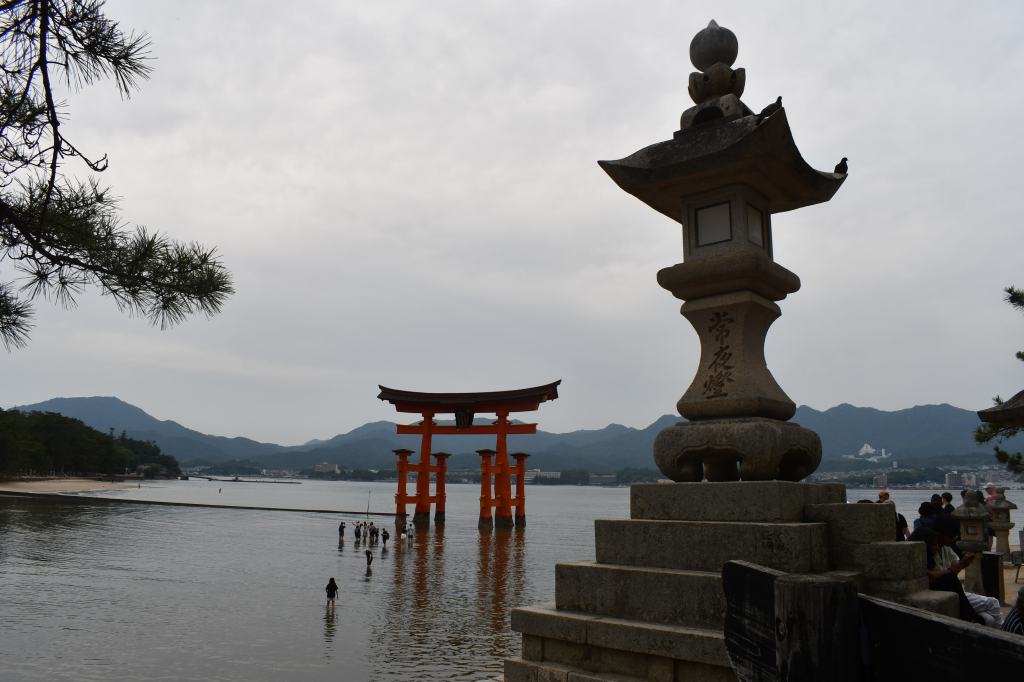
Just south of Hiroshima, Japan, tourists can take a short ferry ride to one of the most beautiful islands off the Japanese coast. Miyajima Island is special, if not spectacular, in many ways.
The ferry cost is minimal, so we won’t bore you with those intricacies. The cable car to the midway point on the island is also not expensive, but unless you want to hike to that point, it’s the only way to get close to the top before you have to make the hike to the apex.
History tells us that the first Emperor of Japan visited the island and decided that it was so pristine and beautiful that it needed to be preserved, but more importantly, shared with the Japanese people. The island has many smaller temples scattered across the mountainside, with one large temple at the base, near the ferry port.
Standing here, you can see the floating Torii Gate, one of Japan’s most visited landmarks. It’s stunning. At high tides, the gate comes out of the water, but be warned, when the tide is out, so are all the throngs of visitors. Wading through the water to get close to the gate, it’s nearly impossible to get a clear picture without a throng of vacationers taking up the space.
The stunning beauty of Japan’s Miyajima Island makes it hard to pass over
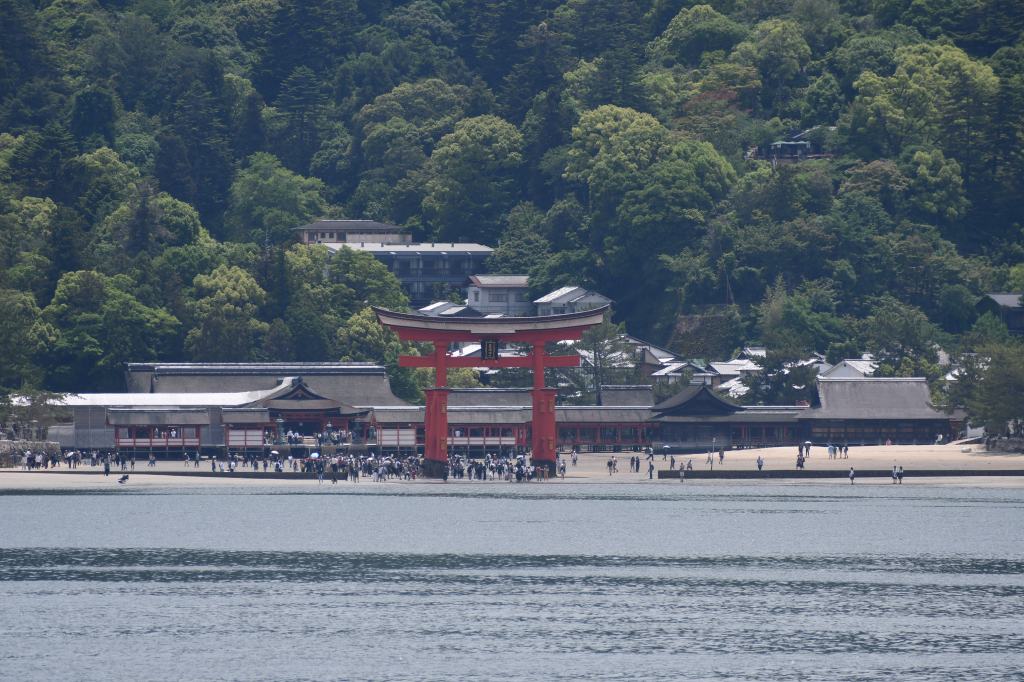
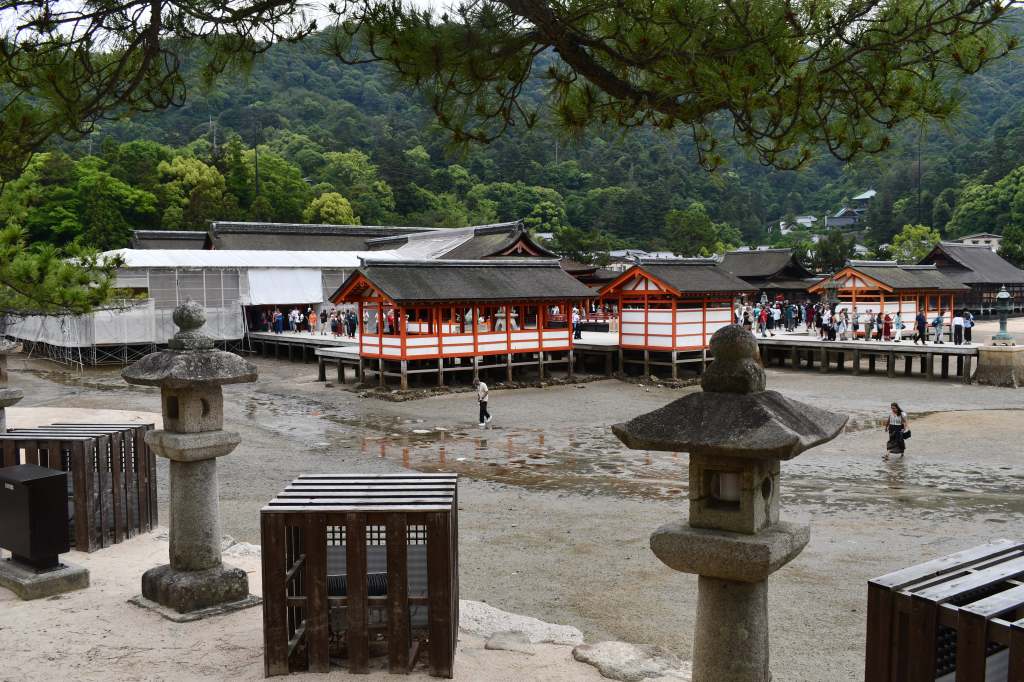
Behind the gate is the Itsukushima Shrine. I visited while it was under construction, but as the tide rises, it fills in the moors surrounding it.
Like every tourist destination, Miyajima has become a trap. There are hotels, visitor centers, restaurants, and more. Winding your way off the ferry to the right of the exit will take you past the visitors, and as you travel toward the mountain base, you will come to the cable car that will whisk you to the midway point with amazing views of Hiroshima Bay. It’s a surreal feeling when you think about the city’s past and rebirth.
The top of the mountain is accessible only by hiking. It’s all uphill, and back down again. It’s not an easy hike, and those who think the downward hike is easier would be wrong. It’s tough in both directions, but oh my is it beautiful.
The paths are not always carved stone steps, and in many areas, you are walking on and over wet ground. It is slipper…I found this out the hard way.
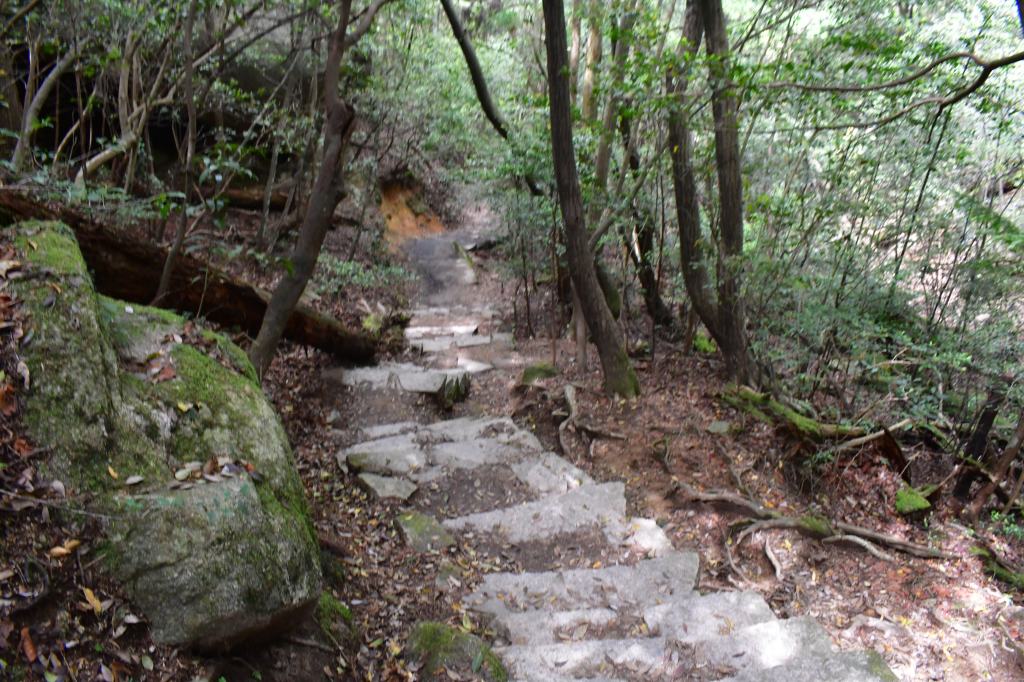
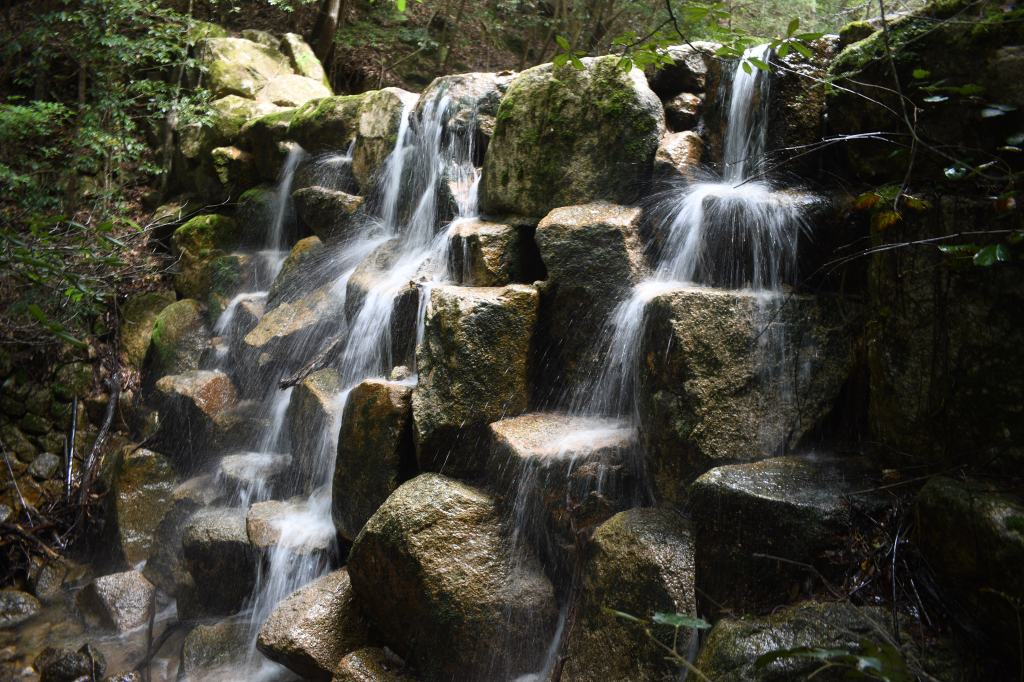
As you get toward the bottom, you are greeted with the sounds of wind blowing through the trees and cascading waterfalls.
The real history, however, is in the areas that you can’t walk. So much of this island is preserved. There are areas that have never been touched by humans, adding to the mystique. There are ropes and notices asking you not to enter certain areas.
Miyajima is one of Japan’s prized historical sites, and it deserves the respect it demands.
Notices around the mountain remind you that it is a nature preserve; in other words, there are snakes, and they want you to be aware of your surroundings.
The biggest question is whether or not you should visit the island. If time is of the essence, it’s not something you “must-see,” but its beauty is hard to pass up. There are a lot of people here. From the moment you reach the ferry port to the moment you get off, you can expect hundreds of visitors lining up for the cable car or waiting for a chance to get a picture of the gate.
Along the way, you will encounter deer. Whether it is walking up the hills to the cable car or wandering the streets and parks around the bay. They are not afraid of humans, so keep this in mind when you sit down to eat lunch. They will literally snatch it out of your hands.
On the trail, it’s not as busy as you might think, but you will cross paths with those visitors hiking up or down the hill. We opted to take the cable car to the top and then hike down. We sadly didn’t make it to the top, as our time here wasn’t budgeted well.
It’s important to note that if you plan to visit the island, don’t plan on visiting the Golden Dome or the Hiroshima memorial. You won’t have time to do both. Because of our time-management miscues, we only had a chance to explore the grounds of the Golden Dome and didn’t get to visit the museum.
The island’s main shrine is dedicated to Ichikishima-hime-no-mikoto, Tagori-hime-no-mikoto, and Tagitsu-hime-no-mikoto, three female deities. They represent the goddesses of the sea, fortune, transport, and the arts.
If you choose not to visit the island, that’s fine. Personally, my visit left me with reservations about whether I should have spent time there. Tourism takes a lot away from the island’s beauty, but looking back, I no longer have the regrets I did on the day I visited; after all, I, too, was nothing more than a guest.
To visit the island, make a reservation before you go. The ferry fare is included in your Japan Rail Pass if you purchased it. It’s a 10-minute ride across the bay. The tickets for the cable car should also be reserved as well. The cars are small, and you could bump knees with strangers.
 Passes to Passports
Leave a comment