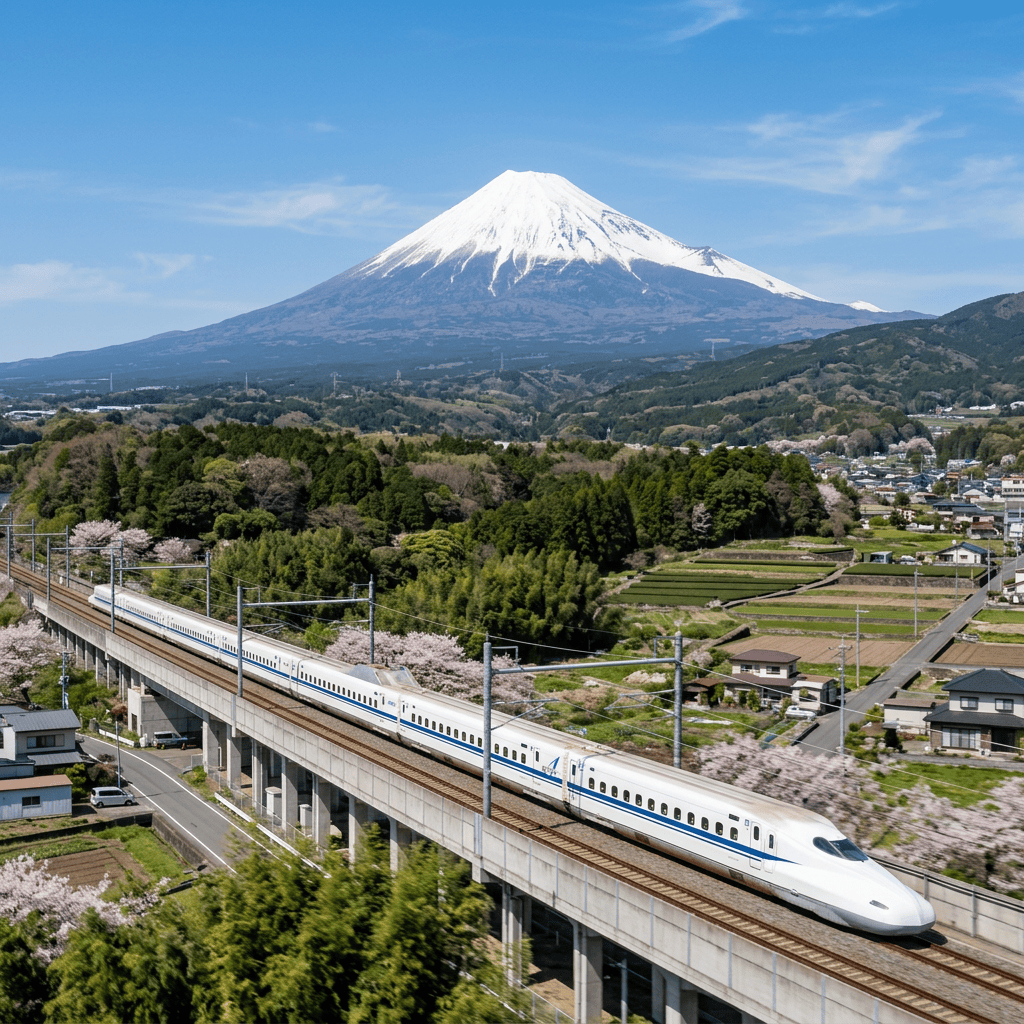
There is an excitement that builds months in advance of a trip to Japan. When I started making my plans, there was one decision that kept playing on my mind. Should I get the JR Rail pass or skip it?
We will dive into what it is in a moment, but there are few things you need to know up front.
1: You have to pre-purchase the pass prior to leaving for Japan.
2: You have to receive the JRP voucher before you leave and have it with you
3: The cost is more than $500 U.S. per person for 14 days
4: There are two classes, standard, and Green. Green is akin to first class
The last part of this is true. It will cost you more for the pass than most hotels you will book and far more than the food you will eat. Again, we will get to that in a minute.
To get the pass you have to purchase it at least two months before you leave. You will apply for it at JRPass.com. You will need to decide on your duration. Once it is activated (Not when you arrive in Japan) the countdown will start.
The company will send the voucher/exchange order within one or two business days via express mail. Mine arrived by FedEx. Once you get it, put it with your passport and don’t lose it. It can not be replaced. When you are ready to exchange the voucher, just head to any number of JR Pass offices located around the country. I exchanged mine at Tokyo Station once I arrived at Haneda airport.
What is the JR Pass and do you need it?
The pass is exactly what it says, it’s a pass to ride nearly every train in Japan. There are a few routes that do not accept it, but for the Shinkansen and local rails, simply insert your ticket (don’t lose it) and off you go.
With the pass you can make reservations on the Shinkansen that will guarantee you actual seating. The Bullet Train is the most expensive train to take in Japan. To go from Tokyo to Kyoto took roughly 2.5 hours at a price of around $80 U.S. one-way.
If you are staying locally in Tokyo or another city, you won’t need to spend the money as the local trains are far more inexpensive and can be handled with a Suica, Pasmo, or Icoca card. These are something you absolutely want to get.
The cards are literally pre-filled debit cards that you can continue to load. They are accepted at retailers, bus and train terminals, and just about every where you go. They are also considered a collectible and each region of the country has their own style. Don’t worry they work throughout the country regardless of where you get them.
For me, the JR Pass made sense. I traveled from Tokyo to Kyoto to Uji and Nara. I then traveled to Nagoya on the Bullet Train and then back to Tokyo and back to Kyoto. I also took the Bullet train to Hiroshima and Fukuoka. The value for me was that I wasn’t paying the cost of every ride.
It’s important that you review your itinerary. If you are planning to use the long distance trains often, you are probably going to get your money’s worth by purchasing it. If you are only going to use a few local trains or maybe the Shinkansen one-way, it likely won’t be cost effective.
JR Pass gives you piece of mind when traveling. You know that if you change a plan and want to travel further for a day or two, the Bullet train is quickest option and considering a trip at $80.00 one-way is quickly $160.00 round trip, you have nearly half way there.
JR Pass is not for everyone
You can not be a Japanese resident or on a student visa. These passes are strictly for foreign travelers who are visiting for 14-90 days. You may not get one if your visit is primarily for business.
Note: When you arrive in customs, your passport will be stamped with a “visitors” or “tourist” stamp. You must have that on your passport to redeem your voucher. If you do not, or if you fail to provide your voucher, there is nothing they will do and you will not receive the pass.
The JR Pass is not a card. It’s a paper ticket and it non-replaceable if lost or forgotten. It is not transferrable and at any time should you be asked by an agent for you JR Pass you will need to produce your passport as well.


Leave a Reply